
2.1 Talking about GERD/Acid Reflux
Talking about Gastroesophageal Reflux Disease (GERD)
This is an opportunity for you to practice talking in ASL about GERD (heartburn and acid reflux.)
Steps to the Process
- View the diagrams and read the information in English
- Video yourself explaining the information in ASL
- View ASL resources about information
- Re-do your explanation in ASL incorporating new ideas.
1: English Information and Diagrams about Gastroesophageal Reflux Disease (GERD)
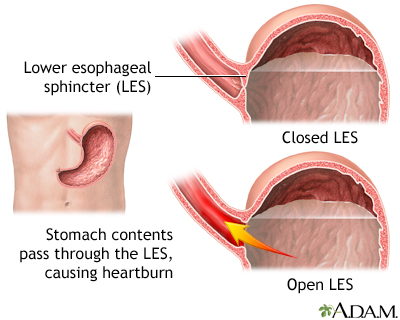 |
Gastroesophageal reflux disease (GERD) is a more serious form of gastroesophageal reflux (GER), which is common. GER occurs when the lower esophageal sphincter (LES) opens spontaneously, for varying periods of time, or does not close properly and stomach contents rise up into the esophagus. GER is also called acid reflux or acid regurgitation, because digestive juices—called acids—rise up with the food. The esophagus is the tube that carries food from the mouth to the stomach. The LES is a ring of muscle at the bottom of the esophagus that acts like a valve between the esophagus and stomach. When acid reflux occurs, food or fluid can be tasted in the back of the mouth. When refluxed stomach acid touches the lining of the esophagus it may cause a burning sensation in the chest or throat called heartburn or acid indigestion. Occasional GER is common and does not necessarily mean one has GERD. Persistent reflux that occurs more than twice a week is considered GERD, and it can eventually lead to more serious health problems. People of all ages can have GERD. ~ From National Digestive Diseases Information Clearinghouse |
 |
When the lower esophageal sphincter doesn't function properly, acid and food can reflux up from the stomach into the esophagus. This can lead to pain (heartburn) and damage to the lower esophagus. This damage can cause strictures (narrowing) of the esophagus, and eventually, cancer of the esophagus. Frequently, dysfunction of the lower esophageal sphincter is associated with a hiatal hernia, in which the lower esophagus and upper part of the stomach slips up into the chest.
~ From MedlinePlus.gov
|
MedlinePlus Video on "Heartburn"
2: Create your own explanation in ASL
Use the above information (or more sites from the links on the web) to create an explanation of what heartburn, acid reflux and GERD is.
Create your ASL explanation as if you are talking to an imagined target audience.
About Your Target Audience
You can choose the audience you have in mind. It might be helpful to think of a specific patient who you have worked with or a specific consumer, recognizing that who your consumer is and how much knowledge they have about anatomy will affect the way that you create your explanation in ASL.

Post your reflections (and video - optional) in the discussion board.
The discussion forum has questions that you can use asa a basis for reflection.
3: View ASL resources related to the topic
|
View videos on DeafHealth.org.This site has the following relevant videos: |
Sample from Nigel |
Finished preparing with these resources, go on to step 4. |
Sample from Doug |
4: Re-do your video of your ASL explanation
After having viewed the ASL videos, re-do your own explanation in ASL. Try to incorporate some of the new ideas that you saw.
Post your reflections (and video-optional) in the discussion board.
The discussion forum has questions that you can use asa a basis for reflection.